.png/picture-200?_=1709ac8e108)
Karangasem
During the 18th and 19th centuries, it was the most powerful kingdom in all of Bali, with an extension of 839.54 km², known for its impressive landscape formed by the lava flows of Gunung Agung the sacred mountain of Bali. The beautiful terraced rice fields are located on the lower slopes of the Southeast; Clove and coffee plantations are further north.
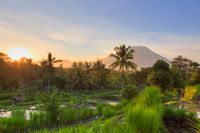
Mount Agung- The highest and most revered mountain, Gunung Agung is an imposing volcano that can be seen from most of the south and east of Bali when it is free from clouds and fog. At 3,142 meters high, it is the highest point on the island. The summit is an oval crater about 700 meters wide, with its highest point on the western edge above Pura Besakih.
It is the spiritual center of Bali, the traditional houses are built on an axis in line with Agung and the Balinese are guided by the position of the mountain.
The main religion is Hinduism and Mount Agung is considered a sacred place being the home of the gods where ancient spirits are believed to be found. Legend says that the island did not exist until the gods created the Mountain. That holds the earth together and is the center of everything. Protects the island of Bali like a sleeping giant and has a great influence on weather patterns.
The volcano has erupted sporadically since November 2017, without being a security threat.

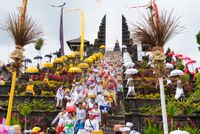
Besakih Mother Temple- It is the largest and holiest of Bali temples. Located on the slope of the divine Mount Agung, it is made up of 22 different temples, the main one being Pura Penataran Agung, an extensive sanctuary with different areas representing the seven layers of the universe. At the top is Pura Pangubengan a darkened stone temple that offers wonderful views of the complex. There are three temples dedicated to the Hindu trinity: Shiva (the destroyer), Brahma (the creator) and Visnú (the preserver). Four of the temples in the complex reflect the four forms of God through the cardinal points: Pura Batu Madeg in the north, Pura Kiduling Kreteg in the south, Pura Gelap in the east and Pura Ulun Kulkul in the west.
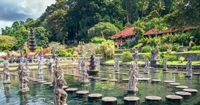
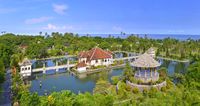
Tirta Gangga- Located in the village of Ababi, the royal water garden was built in 1946 during the reign of the last slit of Karangasem, Anak Agung Anglurah Ketut Karangasem (1887 - 1966). The region's royal family property features tropical gardens, children's pools, fish ponds, and fountains. Surrounded by well-cut grass adorned with ornamental statues that are a treat. The resort is a cool retreat in the eastern highlands, located on the southeast slope of the highest mountain on the island, Mount Agung.
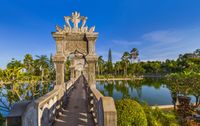
Upon entering the site, the first thing that comes into view is a pond with guardian figures and interior tiles that allow visitors to "walk around it at any of its points." You can see the large golden tents up close in its transparent waters. and shallow. Behind the first pond is the central fountain, again with guardian statues at its base. This 10-meter-tall fountain has eleven levels with a lotus shape at the tip. Dripping water splashes the levels to create a refreshing effect and a relaxing view. The springs are located on the highest ground to the right of the entrance, under a large fig tree. The water is considered sacred by the locals and is used during religious ceremonies as well as a source of drinking water. On the lower level there are two transparent pools. One of them serves as a public pool where visitors can swim. With a design dating back to the old days consisting of sandstone and natural materials. The different depths of the floor allow people of all ages to enjoy them. The large 100-square-meter pond on the south side of the complex is filled with large gold carp and other large fish, and swimming is prohibited. Two bridges connect the sides of the pond, which feature ornate mythical Balinese dragon statues on either side.
Ujung Water Palace- The "water palace", officially known as Taman Sukasada Ujung is located in the town of Seraya. It is the sister site of Tirta Gangga, also built by the late Karangasem Raja. The complex consists of several large pools and historical structures located at the bottom of Mount Agung and the east coast. With a combination of Balinese and European architecture through three large ponds connected by bridges and paths, long and elegant. Favorite spot for wedding and art photographers. The name 'Ujung' means "extremity" in Indonesian, often making it easy for locals to describe its location as one of the largest historical monuments and landmarks in the easternmost part of the island.
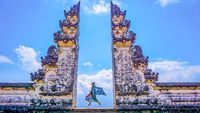
Lempuyang Luhur Temple- Known as the "gateway to heaven" it is one of the holiest and oldest places on the island. Located on Mount Lempuyang at 1,175 meters above sea level. Formed by seven temples with a total of 1,700 steps to reach the top from which the Angung volcano is seen and its great power where you will breathe pure nature, a majestic view that transports you to infinite peace and tranquility as it is a truly special place close to heaven!. The trek is meant to be very spiritual, Hindus think that "those with a heavy heart" will not reach the top. Complaining about the steep hike is considered weak and disrespectful.
Amed- It stretches along the 14 km coastline from the village of Culik, which incorporates seven villages: Amed, Jemeluk, Bunutan, Lipah, Selang, Banyuning and Aas. The pace of life here is slow and the coastal scenery quite impressive, making Amed the perfect place for a relaxed Bali vacation.
Famous for being one of the best diving spots on the island, where there is the sunken ship “Japanese Shipwreck” a few meters from the coast, which can be visited even while snorkeling.
It is the base most used by visitors who wish to dive in the USS Liberty shipwreck in Tulamben and is also highly recommended as an operations center for any type of excursion throughout the island.
It is the newest tourist development area in Bali. It was not until 2000 when asphalt was laid on the roads. The telephone lines were installed in 2003.
The inhabitants of Amed live on fishing, salting and tourism. Where everyone knows everyone, where a true feeling of community reigns in the village.
Bathing in its beaches while you watch the sunset with the sun disappearing behind the Agung volcano in the background is priceless, the truth is that it is a very magical place.
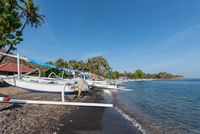
Known for its beaches, bordered by traditional Junkung fishing boats where you can enjoy nature to the rhythm of the wind on sailboats, spot dolphins, snorkel or simply swim and relax. Characterized by its fairly coarse black volcanic sand, as one moves east (and away from Mount Agung), the beaches have softer sand and become more of a medium greyish brown color. The most beautiful bays are probably those of Jemeluk and Lipah, but the entire stretch of coastline is very attractive.
Favorite tourist destination for honeymooners and very popular with expats on the island "who even escape to make their own vacation in Bali."
Where to enjoy a traditional invigorating massage, especially on the beach in Lipah.
Another reason for tourism is its proximity to the famous Gili Islands, since they are only 35 minutes away by speedboat

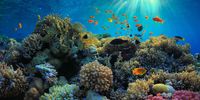
Padang Bai- Known for its main port in eastern Bali, where ferries and boats take travelers southeast to the port of Lembar on the neighboring island of Lombok. It offers some cultural sites as well as in its waters, reefs full of marine life with good visibility, a fantastic place where to practice diving and snorkeling, enjoy great sightings of many marine species, napoleons, reef sharks, stone fish, moray eels, blue eels, rays, squid, octopus, cuttlefish and others in its small but large collection of white sand beaches. The bay is mostly calm throughout the year and it is best to swim at high tide due to the proximity of the reef.
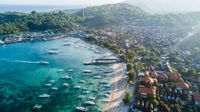
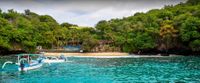
- Blue Lagoon is one of the best isolated beaches in eastern Bali. It is located northeast of the main Padangbai beach and is framed by green and rocky hills on both sides. You can choose to sunbathe on the sand, or in a space in the shade, as the entire edge of the beach is lined with palm trees. There are also "warung" food stalls selling cold drinks and snacks. It is recommended to rent snorkel and fins to enjoy the coral of its waters a few meters from the shore.

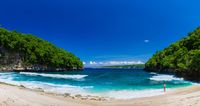
- Bias Tugel often called "secret beach" due to its location between small mountainous layers, it is a strip 130 meters southwest of Padang Bai port, which also offers calm and blue waters most of the year with incredible scenic view, white sand and black rock, "ideal for swimming". It is very quiet with few visitors which makes you can relax.

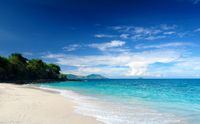
There are several temples around, Pura Tanjungsari and Pura Telaga Mas, the most important being the 11th century Pura Silayukti.
Pura Silayukti- Surrounded by wonderful white sand seascapes and full of spirituality the temple is a great place to capture sunsets and sunrises. If you are ready for a more mystical experience, you may be lucky to receive a small "purification ritual" with holy water and blessings from the local priest. Its vibrant anniversary is celebrated in "Kliwon Pahang", marked on the 210-day Balinese calendar "Pawukon", when pilgrims from all over the island attend prayers, usually for four days.
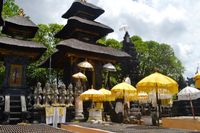
Bukit Jambul- It is the name of the hill where there is a large fig tree that grows on its top like a ridge, "Bukit" means hill, and Jambul crest. Famous for being within an amazing landscape, with terraces of rice paddies and palm trees that extend to the sea. Located in the area of the plateau that is always covered by cool temperatures that make it an ideal place for relaxation. Tourist destination as a stopping point in the programs of visits to the temple of Besakih.

Bukit Gumang- Found in Bugbug village. This hill faces the great Agung Mountain, if the day is clear you can see Rinjani Mountain and Lombok Island. To reach its top it takes approximately 40 minutes of trekking, where the ancient temple known as "Pura Bukit Gumang" is located, where you can savor incredible sunrises.
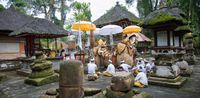
Bukit Asah- Located in the town of Bugbug, a hill where the sea, the beach, cliffs meet where you can savor the sunrise and sunset with its incredible views, enjoying the tranquility and nature and you can even stay in a camping.
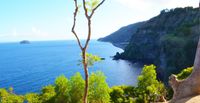
Pasir Putih- It is one of the "hidden" beaches on the island. Despite its remote location, this beach gained popularity having various nicknames such as "Perasi Beach", which refers to the town where it is located, "White Sand Beach", "Virgin Beach" and "Hidden Beach". It stretches between two hills between the villages of Bugbug and Perasi. Its charm lies in its serene surroundings and its calm waves. A unique combination of boulders near the cliffs and white sand. Where to enjoy various water activities such as swimming, snorkeling, sunbathing, or eating with great views. With several locally run restaurants and cafes (traditionally known as 'warung') lining the east side of the beach, near the parking area. Seafood and grills are the common standard, while simple but international selections like sandwiches and omelets are also available. As well as refreshing coconuts cut on the spot, delicious fresh fruit juices etc. Several warungs also offer equipment rental and guide services to accompany fishing, snorkeling and diving trips. At the western end, you can see parked rows of jukung “the boats” of the Perasi and Bugbug fishermen.
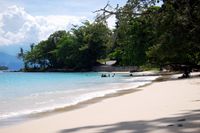
Puri Agung- It was the royal palace of the Karangasem kingdom, offering a glimpse of the splendor of the days when the Rajas ruled Bali. Located in downtown Amlapura, it is a fascinating stop for anyone interested in architecture or history. It was built in the late 19th century and is still the home of the descendants of the royal family. It comprises several large buildings and numerous separate courtyards that combine Balinese, European and Chinese architectural styles. A pagoda-style entrance gate with tears, symbolizes the three worlds heaven, earth, and hell.
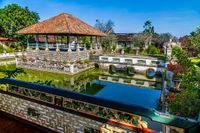
Odyssey Submarine- It is the only submarine in Indonesia. The private exotic realm of divers and marine biologists can now be experienced by people of all ages, drawing from professional divers to the more timid who can't swim. Without posing a threat to the fragile marine environment, it can carry 36 passengers at a depth of about 46 meters or more. Where to contemplate and enjoy the fantasy of the reefs and a great variety of sea creatures.
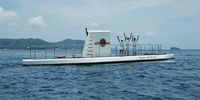
Bukit Putung- Putung Hill has a wonderful natural perfection that captivates the eyes of visitors. Combination of green mountains with blue sea in the distance and a variety of lush trees, palms and plantations where you can observe the beauty of nature in the Manggis district, with a calm atmosphere and especially the very fresh air.
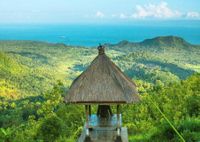
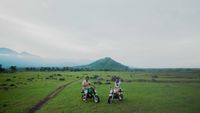
Savana Tianyar- In Tianyar village there is an area similar to the exotic and famous landscapes of Savana Luas on the island of Sumba. During the rainy season, the landscape changes 180 degrees from arid to fresh green. A fun activity is to tour the Savana using the classic mini motorcycle (Monkey Bike). It is one of the places in Bali that are still little frequented, special place for photography. There are also some horses cared for by local residents, if you are lucky you can play with them. At the top of the hill is the temple of Pura Bukit Mangun, to access you have to climb hundreds of stairs to reach the top. Where to enjoy magnificent views, the vast expanse of Tianyar village, the lush stretch of the east coast and the beauty of Mount Agung.

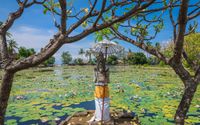
Lotus Lagoon- The Lotus Lagoon is located in Candidasa and is one of its main and iconic attractions, it is located along the main road and is easily visible. The 1,000-square-meter lagoon is filled with pink and fuchsia lotus flowers with a small garden island with statues as the centerpiece. Where is the 12th century temple of Pura Candidasa, with twin shrines under a densely forested hillside. The temple is dedicated to the Hindu god Shiva and the fertility goddess Hariti. It is open to the public and is a regular stop for visits. From here, you can see the rugged Candidasa coastline with its calm waves, as well as Gili Biaha, one of the smallest islets on the coast.
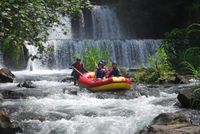
Telaga Waja River- The Telaga Waja River is 16 kilometers long and it takes 2.5 hours to complete the entire rafting route it offers, being the longest on the island. Where emotion and adventure are guaranteed enjoying a fresh and pure air.
Tenganan village- It is one of the oldest villages in Bali, famous for preserving local culture and traditions. Known for the science of cultural literature in Tenganan Pegringsingan. It has a unique local community life pattern that is only available in the ancient villages of Bali (dating back to Hindu prehistory). What differentiates it from other existing towns on the island. It has been designated as a tourist destination in the Karangasem region.